
Traditionally, a bank was the financially secure place where people stored their wealth, protected their purchasing power, and planned for the future. While banks continue to play an essential role, many long-term investors are beginning to ask a different question: Is cash alone still the best place to preserve wealth? Inflation continues to reduce purchasing power, financial markets remain vulnerable to economic uncertainty, and investors are placing greater emphasis on owning assets with lasting value. As a result, attention is shifting toward tangible assets that can help preserve capital over the long term.
Raw land is one of those assets. Unlike cash, land is finite. It cannot be printed, manufactured, or replicated, and its value is supported by real-world demand. Combined with long-term appreciation potential and opportunities to create value through water rights, natural resources, and strategic land use, raw land has become much more than real estate for many investors.
Why smart investors choose land for long-term wealth preservation
For investors focused on preserving wealth over decades rather than chasing short-term returns, raw land offers several characteristics that make it uniquely attractive. For many investors, strategically acquired land is beginning to serve a similar purpose, often in ways that cash cannot. Unlike money, which can lose purchasing power over time due to inflation, land is a tangible asset with intrinsic value. Its limited supply and long-term demand have helped make it a reliable store of wealth. As populations grow, infrastructure expands, and natural resources become increasingly valuable, well-located land has the potential to appreciate while preserving its long-term value.
Instead of relying entirely on financial markets, many investors include land in their portfolios as a way to diversify and help preserve capital through different economic cycles.
Why land follows a different investment cycle than traditional assets
Every investment comes with some level of risk; not all assets respond to the same economic forces. Stocks and other publicly traded investments can rise or fall quickly based on investor sentiment, earnings reports, interest rate changes, or global events. Their prices often reflect what the market expects to happen next.
Raw land is different. Its value is typically driven by real-world fundamentals that develop over time rather than short-term market movements. Factors such as location, population growth, infrastructure expansion, water availability, natural resources, and future development plans often have a greater influence on its long-term potential than daily headlines or market sentiment.
Key factors that can influence land value include:
- Strategic location.
- Infrastructure improvements.
- Population growth.
- Natural resources.
- Water availability.
- Future development potential.
Because these drivers evolve gradually, land has historically experienced less day-to-day price volatility than many publicly traded assets. While no investment is without risk, many investors view land as a complementary asset that can add diversification to a portfolio because its performance is often less closely tied to the stock market.
How land creates value beyond appreciation
One common misconception about raw land is that it remains idle until it’s sold. In reality, well-selected land can create value long before a sale takes place.
For many investors, land offers two key advantages:
- Long-term capital appreciation as the property’s value grows over time.
- Opportunities to generate income while the land is being held.
Depending on the property’s location, characteristics, and local demand, landowners may be able to generate income in several different ways while continuing to hold the property.
| Opportunity | How It Creates Value |
|---|---|
| Agricultural Leasing | Generates recurring lease income. |
| Hunting & Recreation | Provides seasonal revenue. |
| Timber Resources | Creates income through sustainable harvesting. |
| Carbon Credits | Monetizes environmental benefits. |
| Renewable Energy | Supports solar or energy development. |
| Water Rights | Creates valuable resource opportunities. |
| Easements | Provides income through access agreements. |
Potential income sources may include: This combination of appreciation and income is one reason many investors consider land a compelling long-term investment.
Why water rights can significantly increase land value
As demand for freshwater continues to grow across agriculture, residential development, and industry, properties with secure and transferable water rights are becoming increasingly attractive. As demand for freshwater continues to grow, this advantage is becoming increasingly important for long-term land investors. Water plays an important role in agriculture, residential development, and many industries. Having reliable access to water can increase both the usefulness and the long-term value of a property.
Experienced land investors look beyond the size of a property. They also consider water availability, natural resources, and future development potential. Together, these factors can create long-term value that goes beyond land appreciation alone.
Why Tertiary Markets Offer Hidden Opportunities
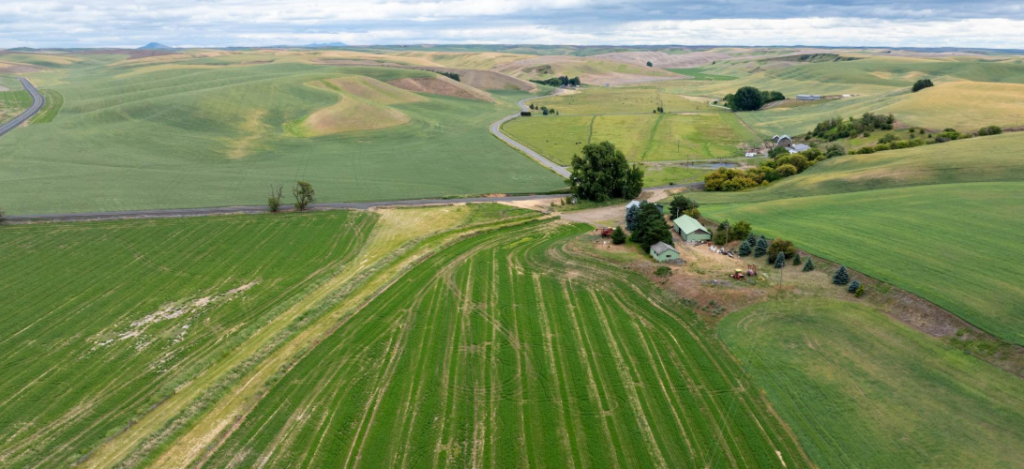
Not every valuable investment opportunity is found in a major metropolitan area. When people think about real estate investing, they often focus on large cities. Large cities don’t always offer the best land investment opportunities. However, experienced land investors know that some of the strongest opportunities can be found in smaller, less competitive markets.
Tertiary markets often offer:
- More attractive acquisition prices
- Larger land parcels
- Less competition
- Greater development flexibility
- Opportunities to unlock hidden value
Areas throughout Montana, Idaho, and Washington have gained attention because they combine abundant natural resources with long-term development potential. For investors willing to look beyond major metropolitan areas, these regions may offer significant opportunities.
How land provides long-term financial flexibility
One reason many investors describe land as “your bank” is the financial flexibility it can provide over time. Unlike many traditional investments, land can offer several ways to access its value without selling the entire property.
Depending on the property’s characteristics and local regulations, owners may be able to use the land as collateral for financing, sell a portion through subdivision, grant easements, or generate income from compatible land uses while continuing to own the remaining property.
This flexibility allows investors to respond to changing financial needs without giving up their entire investment. Instead of serving as a passive asset, well-selected land can become an important part of a long-term wealth strategy.
How land supports long-term wealth preservation
Land investing is a long-term strategy, not a way to make quick profits. Success depends on choosing the right property, doing proper research, and identifying opportunities with long-term potential. Patience often plays an important role in land investing. Unlike assets that are frequently traded, land is generally purchased with a long-term outlook, allowing its value to grow alongside demographic and economic changes. Investors who focus on these fundamentals are often better prepared to benefit from future appreciation while keeping a diversified portfolio.
Like any investment, buying land carries risk. However, its limited supply, real ownership, and long-term value make it a strong option for investors looking to preserve and grow their wealth over time.
Final Thoughts:
Raw land offers more than long-term appreciation. It provides tangible ownership, multiple opportunities to create value, and the flexibility to support long-term financial goals. While every investment requires careful planning and due diligence, land continues to attract investors looking for stability alongside growth. For many, that is what makes land more than just an investment; it becomes a lasting store of wealth and, in many ways, their bank.
Frequently Asked Questions (FAQs)
1. Is land a good investment for long-term wealth?
Yes. Raw land can be a strong long-term investment because it is a tangible asset with limited supply and long-term appreciation potential. With careful property selection and proper due diligence, it can help preserve and grow wealth over time.
2. Can raw land generate passive income?
Yes. Depending on the property’s location and characteristics, raw land can generate income through agricultural leasing, timber, recreation, water rights, carbon credits, renewable energy, and other compatible uses.
3. Why water right is important when investing in land?
Water rights can increase a property’s long-term value by providing reliable access to water, an essential resource for agriculture, development, and many industries.
5. Why do some investors compare land to a bank?
Many investors compare land to a bank because it can help to preserve wealth over time. Unlike cash, well-selected land may appreciate in value while also creating opportunities to generate income.
Tags: land investment, raw land investment, land as an investment, Montana land investment, investing in land, land investment opportunities, long-term wealth preservation, water rights investment, Montana water rights, land with water rights, land investing, real estate land investment, land investment strategy, Montana raw land, land as a store of wealth