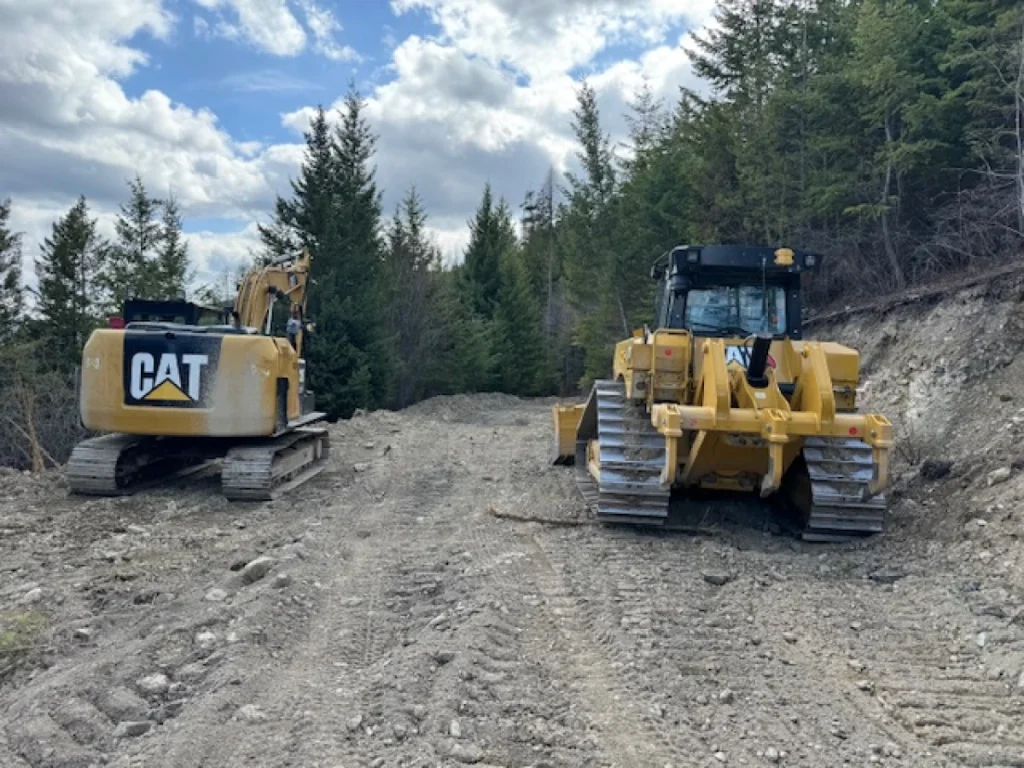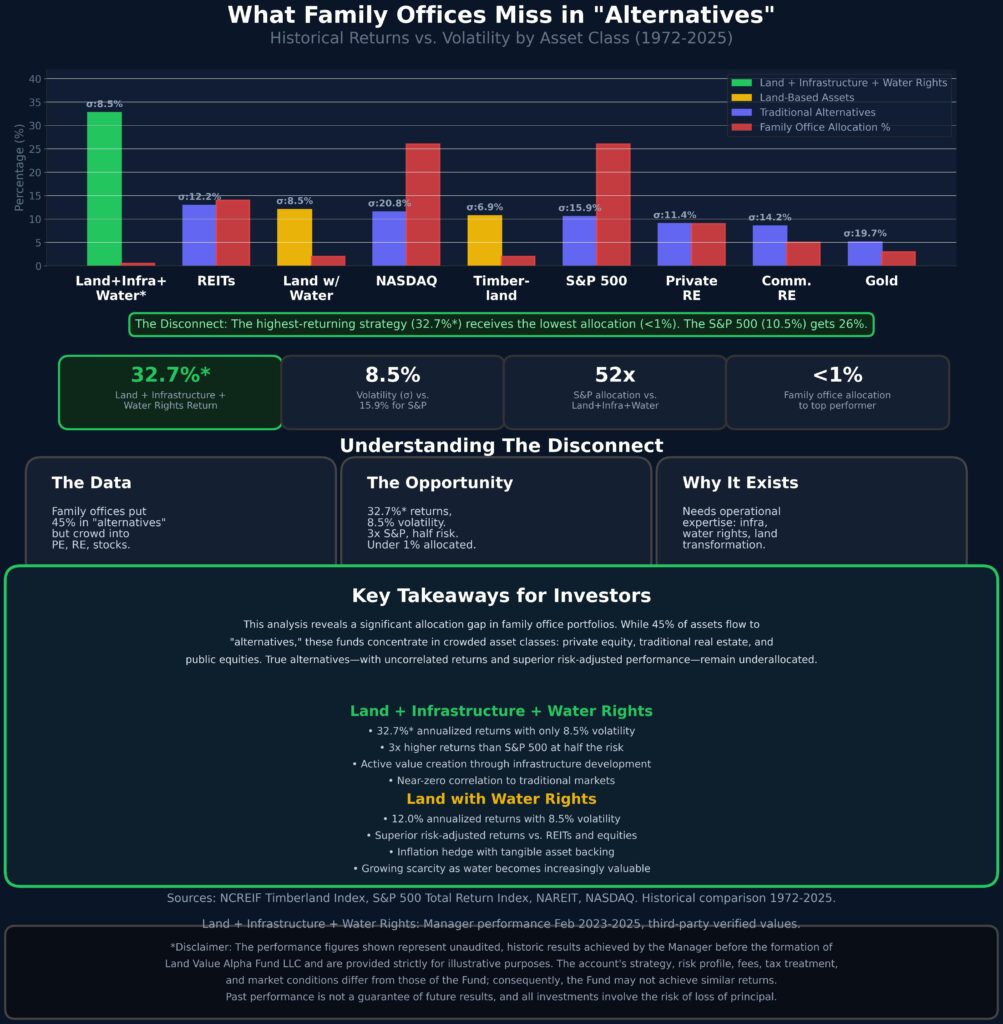
Water is not just a resource; it’s becoming one of the most significant water investment themes of the 21st century. With rising population growth, aging infrastructure, expanding AI-driven industries and increasing climate challenges, the world’s water supplies are under more strain than ever. As scarcity rises and demand accelerates, investors increasingly view water as a strategic asset with the potential for long-term value creation.

A number of institutional investors, developers, and infrastructure funds have already begun investing in water-related assets. Most investors instead focus on land with significant water potential, water rights, and water infrastructure as long-term wealth-building opportunities.
In this article, we explore why water is emerging as one of the most important themes in water investments. We also discuss how water-related assets can create significant long-term value for investors.
Why water is becoming a valuable investment asset
Water is unique among commodities; there is no substitute. It provides help to agriculture, manufacturing, housing, energy production and economic development. With water demand rising and supplies limited, water scarcity is becoming a significant consideration in water as an investment. It is generating new water investment prospects for long-term investors. Several large investors and organizations have already taken note of this trend.
Institutional interest extends well beyond individual investors. Homebuilder D.R. Horton acquired Vidler’s pipeline and water rights portfolio for $291 million, highlighting the growing strategic value of water assets. Goldman Sachs also expanded its exposure to the sector through its Atlas-SSI acquisition, positioning itself to benefit from the U.S. EPA’s estimated $744 billion water infrastructure upgrade cycle. Meanwhile, BlackRock has identified water as a major sustainability investment theme, projecting that 60% of REITs could face high water stress by 2030.
How land becomes a strategic water investment opportunity
One of the most practical ways to gain exposure to water-related opportunities is through land ownership. Certain land parcels possess significant water potential through:
- Water rights.
- Well development opportunities.
- Water storage infrastructure.
- Distribution systems.
- Groundwater resources.
A common investment strategy involves identifying undervalued land with strong water potential, developing wells, securing water rights, and investing in supporting infrastructure. These improvements can significantly increase both land value and long-term development potential.
Five major factors driving water investment growth:
1. Infrastructure creates value multipliers
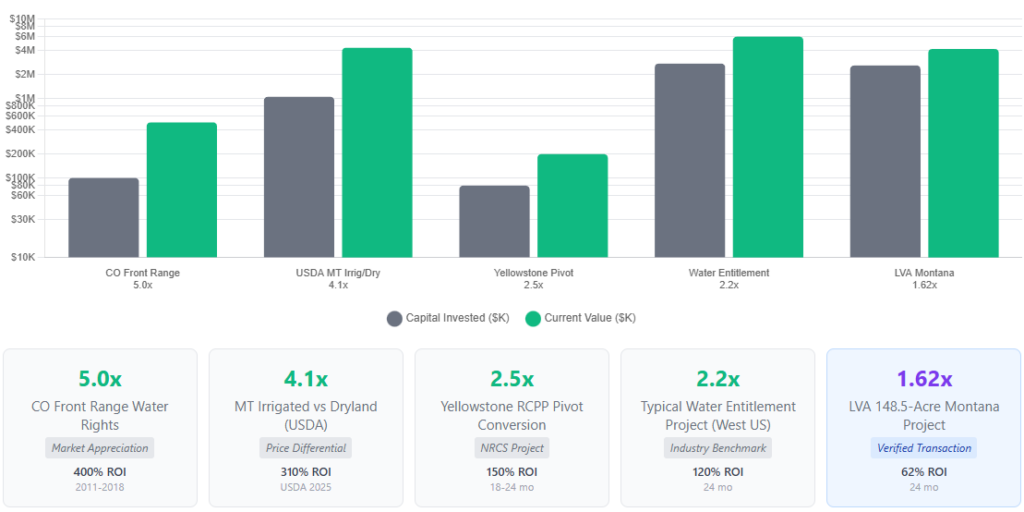
Water infrastructure often generates value beyond its construction costs. In many Western U.S. projects, every dollar invested in water infrastructure has demonstrated the potential to generate three to four times the original investment value, independent of passive land appreciation. These returns are created through improved land usability, development potential, and increased market demand.
Examples include:
- Water wells.
- Pipelines.
- Storage systems.
- Distribution networks.
These improvements can enhance usability, support future development, and increase land values.
2. Growing water scarcity
Water demand continues to increase while available supply remains limited. Population growth, urban expansion, agriculture, and industrial development are all placing greater pressure on global water resources. This growing supply-and-demand imbalance is expected to strengthen the long-term value of water-related assets and create new investment opportunities in water.
3. AI data centres are driving new demand
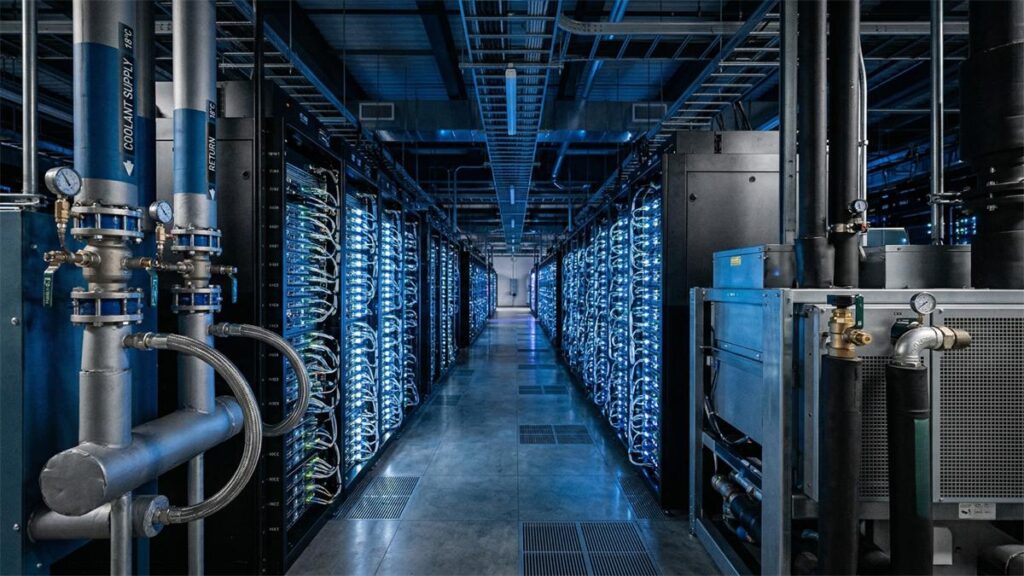
Artificial intelligence has introduced a new source of water demand in AI data centres. Modern data centres require substantial amounts of water for cooling systems and operational needs. As technology companies continue to expand their infrastructure footprints, water availability is becoming an increasingly important site-selection factor.
This trend is creating additional long-term pressure on water resources and strengthening demand for water infrastructure and related systems. As a result, it is expected to contribute to sustained long-term water demand and increased investment interest in water-related assets.
Modern data centres require significant water for:
- Cooling systems.
- Thermal regulation.
- Operational efficiency.
However, AI is only one part of a broader industrial shift.
Additional demand sources include:
- Semiconductor manufacturing.
- EV and battery production.
- Hydrogen energy systems.
- Advanced manufacturing hubs.
4. Water pricing differences create opportunity
In many Western regions, water used for agriculture can be valued significantly lower than water purchased by municipalities and urban users. This pricing gap creates opportunities for investors who understand how water markets operate and how demand patterns evolve.
Water pricing varies significantly across uses:
- Agricultural water: low cost.
- Municipal water: significantly higher pricing.
- Industrial usage: premium pricing tiers.
5. Water rights can become independent assets
In many Western U.S. states, water rights can be legally separated from the underlying land. This creates an additional layer of value because investors may own both:
- Dual-asset exposure (land + water rights)
- Tradable water allocation systems (in some regions)
- Independent valuation of water entitlements.
As a result, water can function as a distinct asset class within a broader land investment strategy.
The importance of entitlements and development potential
Water availability often plays a critical role in land development. Access to reliable water can help transform raw acreage into more valuable development-ready property. When properly planned and approved, water infrastructure can support residential, commercial, or mixed-use projects that command significantly higher market values. For this reason, water is often a key component of long-term land development strategies.
Real-world evidence of water Infrastructure value
While water availability and development potential increase land value, real-world projects also demonstrate the financial impact of water infrastructure investments. The examples below illustrate how investments in water rights, irrigation systems, and supporting infrastructure have generated significant value multiples across different Western U.S. projects.
Why institutional capital is paying attention
Large investment firms, developers, and infrastructure companies increasingly recognize the economic importance of water. Aging infrastructure, rising demand, climate pressures, and technological growth are creating substantial investment needs across the water sector.
As capital flows into water-related projects, investors with access to strategically positioned land and water assets may benefit from these long-term trends.
Bottom Line:
Water is emerging as one of the defining investment themes of the coming decades. Its importance extends far beyond basic consumption, influencing agriculture, housing, infrastructure, technology, and economic development. For many investors, the opportunity lies not in owning water directly but in acquiring and improving land that can benefit from water-related investments, water rights, and water infrastructure development.
Frequently Asked Questions (FAQs)
1. Why is water considered a valuable Investment asset?
Water is essential for agriculture, housing, industry, energy production, and technology. As demand grows and freshwater supplies become more limited, water is increasingly viewed as a strategic long-term investment asset.
2. How can Investors gain exposure to water-related Investments?
Many investors gain exposure to water through land with water potential, water rights, groundwater resources, wells, reservoirs, and water infrastructure, rather than investing directly in water.
3. What is water rights, and why are they important?
In many Western U.S. states, water rights can be legally separated from land ownership, allowing them to be owned, transferred, or sold independently.
4. Why are AI data centres increasing water demand?
AI data centres require significant amounts of water for cooling and operations. As AI infrastructure expands, reliable water access is becoming an increasingly important factor in site selection.
5. How does water infrastructure increase land value?
Water infrastructure, including wells, pipelines, storage systems, and distribution networks, can improve land usability, support development, and increase property value.
Tags: Why invest in water, How to invest in water, Investing in water infrastructure, Investing in water rights, water scarcity investment opportunities, land with water rights, water-rich land investment, water infrastructure projects, water as an investment, water investment opportunities, AI data centre water demand, long-term water investment, strategic water assets, water and land investment